Showing posts with label Heirs. Show all posts
February 14, 2020
Standing to Challenge a Trust
Standing is the ability of a party to file a lawsuit. It acts as a limitation on the class of litigants that can bring forth claims.
For example, a child has standing to contest a parent's will or a parent has standing to pursue a wrongful death action involving a deceased child.
Standing is procedural in nature. That is, the substantive merits of a case are inapplicable to determining whether or not a person has standing.
In terms of a trust, assume that a child was named a beneficiary of their parent's trust in an earlier version. Then in a later version, the child is disinherited. Following the parent's death, the child brings a petition to invalidate the trust amendment which disinherited them pursuant to Probate Code § 17200.
The applicable section reads "Except as provided in Section 15800, a trustee or beneficiary of a trust may petition the court under this chapter concerning the internal affairs of the trust or to determine the existence of the trust." Probate Code § 17200(a).
In a prior post, a California Court of Appeal decision was discussed, Barefoot v. Jennings, (2018) 27 Cal. App. 5th 1.
In that case a California trial court determined, which was upheld by the California Court of Appeal, that a disinherited child could not bring such a petition because they lacked standing.
The California Supreme Court granted review for the case and overturned the ruling of the appellate court.
It held that the "Probate Code grants standing in probate court to individuals who claim that trust amendments eliminating their beneficiary status arose from incompetence, undue influence, or fraud."
Barefoot v. Jennings (2020) ___ Cal.5th ___
Labels:
Disinheritance,
Heirs,
Standing
December 21, 2018
Standing to Challenge a Trust
Standing is the ability of a party to file a lawsuit. It acts as a limitation on the class of litigants that can bring forth claims.
For example, a child has standing to contest a parent's will or a parent has standing to pursue a wrongful death action involving a deceased child.
Standing is procedural in nature. That is, the substantive merits of a case are inapplicable to determining whether or not a person has standing.
For instance, assume a concerned neighbor witnessed their neighbor being coerced into signing a will. The coerced neighbor, a parent, was given the ultimatum by their child to sign the will leaving the entire estate to them, or else the wicked child would immediately place them in a retirement home. The coerced neighbor dreaded the idea of living out their life in a retirement home and repeatedly mentioned such to their neighbor.
The foregoing facts would be highly relevant to a case involving undue influence in regards to the will's execution. However, the neighbor would not have standing to challenge the will's validity, despite their first-hand knowledge, because they lack a familial connection to the neighbor. Conversely, the other children of the coerced neighbor would have standing to challenge the will's validity because they clearly have a familial connection to their parent.
In terms of a trust, assume that a child was named a beneficiary of their parent's trust in earlier versions. Then in later versions, the child is disinherited. Following the parent's death, the child brings a petition to invalidate the trust amendments which disinherited them pursuant to Probate Code § 17200.
The applicable section reads "Except as provided in Section 15800, a trustee or beneficiary of a trust may petition the court under this chapter concerning the internal affairs of the trust or to determine the existence of the trust." Probate Code § 17200(a).
A California trial court determined, which was upheld by the California Court of Appeal, that the disinherited child could not bring such a petition because they lacked standing. The plain language of Probate Code § 17200 provides standing for only trustees and beneficiaries, of which the disinherited child was neither. Therefore, the petition was dismissed due to lack of standing.
Barefoot v. Jennings, (2018) 27 Cal. App. 5th 1
The decision was surprising given that litigants often file suit to challenge a trust's validity based on Probate Code § 17200. Although there had been no case law that supported such an argument until now.
On December 13, 2018, the California Supreme Court granted review for the case. Hence, there will be a future ruling on whether or not a disinherited child has standing to file a petition under Probate Code § 17200.
Labels:
Disinheritance,
Heirs,
Standing
October 20, 2016
Probate Law v. Criminal Law
When a widow or widower passes away intestate (without a will) and they are the sole titleholder to real estate, the property passes first to their children, if any, in equal shares. Probate Code §§ 6400, 6402. Assuming their are children, they have a legal interest in the property as an heir. For example, if there are 5 surviving kids, each would have a 20% ownership interest in the property. They would still need to undergo formal probate to transfer ownership. Still, their ownership in the property vested the moment their parent passed away. Probate Code § 7000. However, a recent unpublished appellate opinion emphasized the difference between probate law and criminal law for burglary purposes.
People v. Perkins, Case # MCR045896, Madera County Superior Court.
The defendant had been convicted of burglary and other crimes, which resulted in an 11-year prison term. One issue on appeal was whether the "defendant had a possessory interest in his deceased mother's house, entitling him to enter when he did."
Since the defendant's mother had passed away intestate, the defendant, as a child, had a legal interest in the property. However, the appellate opinion stressed that the defendant did not have a possessory interest in his late mother's home. That is, the defendant did not live at the residence. According to the opinion, the mother did not allow the defendant in the house except to make an occasional phone call. She only permitted the defendant to keep two garbage bags filled with personal possessions on the back porch. Lastly, the defendant broke into the home through a window (a good sign that you don't live there as most people would opt for the standard door route). Therefore, even though he had a legal interest in the property, as an heir to his mother's estate, he did not have a possessory interest in the property. Since a burglary conviction stems from a lack of a possessory interest, which the defendant did not have, his conviction was upheld on appeal.
This case cited People v. Smith (2006) 142 Cal.App.4th 923 for the proposition that having legal ownership is not the same as having a possessory interest. In that case, a husband was convicted of burglarizing a home which he and his estranged wife owned jointly. (suffice to say a rather messy divorce).
Labels:
Children,
Heirs,
Probate,
Real Property
April 7, 2016
Interpretation of a Will
| Santa Clara County Superior Court |
The late Ethel Josephine Hinz penned a will entirely in her own handwriting. The holographic will read, in its entirety, as follows:
"I, Ethel Josephine Hinz; aka as E.J. Hinz; declare that this will, is my only and last testament.
"I, name my son, Lester F. Hinz, Jr., as sole heir and executor to manage estate affairs.
"In the event of any challenges to said estate, I hereby authorize said Executor to dispense the amount of $1.00, one dollar, to any claimant.
"I am confident that my son, as Executor, will also subscribe to my wishes, along lines that were discussed previously and privately in the past. A simple cremation, without ceremony is the wish of Ethel J. Hinz."
Since the value of the estate exceeded $10M, there were naturally interested parties in this matter. These parties included Lester's wife and two grandchildren of Ms. Hinz (Lester passed away after his mother). The three of them composed the heirs of Ms. Hinz's estate.
The crux here revolved around the phrase "I, name my son, Lester F. Hinz, Jr., as sole heir and executor to manage estate affairs." The trial court invalidated the will as it found that extrinsic evidence could not resolve the ambiguities regarding the aforementioned phrase. The will was found to be ambiguous because it was not clear if Ms. Hinz intended for Lester to be the sole beneficiary or was acknowledging that Lester was her sole child. Due to extrinsic evidence not yielding a clear answer of what Ms. Hinz meant, the trial court invalidated the will. Therefore, Ms. Hinz's estate passed by intestate succession to her heirs, i.e. Lester's wife and her Ms. Hinz's two grandchildren. However, Lester's wife appealed the decision to the 6th District Court of Appeal. On appeal, the trial court's decision was reversed.
The majority opinion found that the will was unambiguous, i.e. the only interpretation of the word "heir" as used in the will was "beneficiary." Therefore, the Court of Appeal found the will to be valid and instructed the trial court to award 100% of Ms. Hinz's estate to Lester's wife.
For reference, if you use a $10M valuation figure, the trial court would've awarded the estate as follows:
1. Lester's wife - $5M
2. Ms. Hinz's grandchild - $2.5M
3. Ms. Hinz's grandchild - $2.5M
Following the appellate court's ruling, the distribution would go
1. Lester's wife - $10M
2. Ms. Hinz's grandchild - $0
3. Ms. Hinz's grandchild - $0
Kind of a big difference.
Granted, Ms. Hinz's grandchild can always appeal this decision to the CA Supreme Court or petition for a re-hearing.
Labels:
Ambiguity,
Beneficiary,
Heirs,
Holographic Wills,
Intestacy,
Intestate Succession
August 12, 2015
Equitable Estoppel
The law does not look favorably upon trickery. This is exemplified by Evidence Code § 623, which states that "whenever a party has, by his own statement or conduct, intentionally and deliberately led another to believe a particular thing true and to act upon such belief, he is not, in any litigation arising out of such statement or conduct, permitted to contradict it." This legal doctrine is known as equitable estoppel.
To prove equitable estoppel, a party needs to show that (1) the party to be estopped must know the facts; (2) the estopped party must intend that his conduct shall be acted upon, or must act in a way that causes the other party to believe that was his intent; (3) the party asserting estoppel must be unaware of the true facts; and (4) he must detrimentally rely on the other party's conduct. Estate of Bonanno (2008) 165 Cal.App.4th 7, 22.
This doctrine was recently raised in an unpublished appellate opinion.
Janene Curtis discovered as an adult that she was the daughter of famous actor Troy Donahue, whose real name was Merle Johnson. Previously, at birth, she had been adopted.
When Mr. Donahue passed away, Ms. Curtis was told by a close friend of Mr. Donahue that the drug Vioxx might have caused Mr. Donahue's death. Ms. Curtis then hired a New York law firm to participate in the class action lawsuit against Merck & Co., the pharmaceutical giant that makes Vioxx. Ms. Curtis was later advised to open a probate in California. Since Ms. Curtis lived in Arizona and probate needed to be filed in California, she asked Eve O'Neill, Mr. Donahue's sister, to open probate in California on her behalf.
Ms. Curtis then negotiated a settlement in the Vioxx case and the estate of Mr. Donahue reaped $190,000. Later it was discovered by Ms. O'Neill's attorney that Ms. Curtis had been adopted at birth. An adoption severs normally severs the parent-child relationship whereby inheritance rights are cut off. Probate Code § 6451. The attorney then filed a petition to have Ms. O'Neill be declared the sole heir of Mr. Donahue's estate and to approve the Vioxx settlement. Naturally Ms. Curtis objected to the petition.
Ultimately, after two appeals, it was determined that Ms. O'Neill was equitably estopped from challenging Ms. Curtis' claim to the assets of the Donahue estate, i.e. the Vioxx settlement.
The California Court of Appeal upheld the trial court's decision that "(1) Ms. O'Neill either actually knew of the legal impediments to Curtis inheriting or that she was culpably negligent for failing to learn those facts; (2) Ms. O'Neill intended Ms. Curtis to act upon O'Neill's assertions that she would prosecute the Vioxx litigation on behalf of Ms. Curtis and then give her all the proceeds; (3) Ms. Curtis was unaware that O'Neill would renege; and (4) Ms. Curtis relied to her detriment on Ms. O'Neill's conduct."
Labels:
Equitable Estoppel,
Heirs,
Intestate Succession,
Litigant,
Litigation,
Probate
January 24, 2014
Change to Intestate Succession Law
![]() |
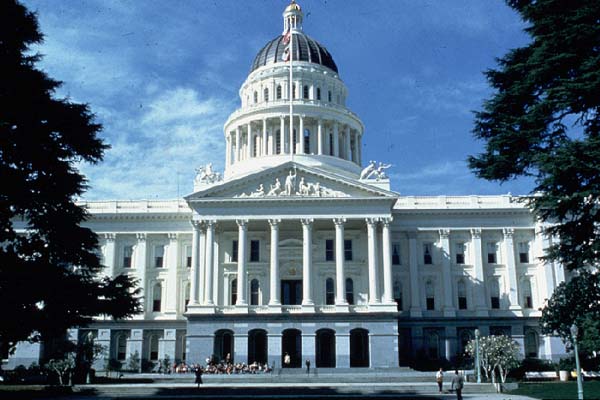
| California Legislature - Sacramento, CA |
One reason why it is prudent to write a will, is to prevent the application of intestate succession. Adherence to the laws of intestate succession are rather strict. If the heir was loved or loathed by the decedent, this person will inherit their estate. Still, California law was recently amended to prevent the ostensible unfairness of intestate succession in one instance. AB-490 modified the law of intestate succession in case of an absent parent. See Prob C § 6452. This law went into effect on January 1, 2014. What spawned this law was the following case and its unfortunate result.
Estate of Shellenbarger (2008) 169 CA4th 894
Lesley Shellenbarger was the son of Clifford Shellenbarger and Laura Barnes. Lesley was conceived while Clifford and Laura were married but during Lesley's pregnancy, Clifford left Laura. Lesley died intestate in April 2005. Probate proceedings commenced in Ventura County thereafter.
Since Lesley passed away without a spouse, child, etc., Laura was appointed administrator of Lesley's estate. During the probate proceeding, Lesley filed a petition to determine entitlement to Lesley's estate, arguing that since Clifford had abandoned his son, Clifford should be barred from inheriting from Lesley's estate as an intestate heir. See Prob C § 11700.
The trial court and later the court of appeal ruled that Clifford's abandonment was not fatal to his claim. Since Clifford was married to Laura at the time of Lesley's birth, Clifford was the natural parent of Lesley. Furthermore, since Clifford's parental rights were not terminated during Lesley's minority, he remained the natural parent and therefore, per the old version of Prob C § 6452, qualified as an intestate heir. This allowed Clifford to receive a portion of Lesley's estate. This despite the fact that Clifford had neither fully paid child support nor seen his son during his 42 years of life.
Still, as consistently stated in various court opinions "the Legislature remains free to reconsider the matter and may choose to change the rules of succession at any time." Estate of Griswold 108 Cal.Rptr.2d 165, 191 (2001). The California Legislature subsequently did take it upon themselves to alter an intestate succession law. Prob C § 6452 was modified such that a parent that basically abandons their child is barred from inheriting from the child as an intestate heir. This modification to Prob C § 6452 would have reversed the outcome in Estate of Shellenbarger because Clifford had abandoned his son Lesley. Thus in a hypothetical world that adhered to the modified version of Prob C § 6452, solely Laura, instead of Laura and Clifford, would inherit from Lesley's estate.
Labels:
Administrator,
Heirs,
Intestacy,
Intestate Succession,
Will
November 27, 2013
Who Can Initiate Probate?
To begin probate, California law specifies which persons are eligible to do so. Typically the petitioner is seeking to become the personal representative, the person who will represent the interests of the estate. Depending on who the person is, the personal representative can be known by the following terms: (1) executor, (2) administrator, (3) administrator with the will annexed, (4) special
administrator, (5) successor personal representative, or (6) public
administrator. Prob C §58(a).
According to California law, "any interested person may commence proceedings for
administration of the estate of the decedent by a petition to the court
for an order determining the date and place of the decedent’s death and
for either or both of the following: (1) Appointment of a personal representative. (2) Probate of the decedent’s will. Prob C
§
8000. The question then becomes, what is the definition of an "interested person."
Consequently California law defines the phrase "interested person" to be the following individuals: (1) an heir, (2) devisee, (3) child, (4) spouse, (5) creditor, (6) beneficiary, or (7) any other
person having a property right in or claim against the estate of the
decedent that may be affected by the proceeding; (8) any person who has
priority for appointment as personal representative; and (9) a fiduciary
representing an interested person. Prob C
§ 48.
Naturally the question then becomes what constitutes an heir, creditor, etc. The following are definitions of an heir and devisee.
An heir is a person who would inherit the decedent's estate if the decedent did not write a will pursuant to the laws of intestate succession. Prob C
§
44. This is a fancy way of saying that a person's estate goes to their next of kin if they did not write a will. For example, John, a widower was a wealthy land-owner who resided in Los Gatos, CA. He had 3 children, Heathcliff, Hugo and Henry. John despised lawyers because he believed them to be devilish and avarice. Consequently, John never planned his estate and he died without having penned any estate planning instrument(s). His 3 sons, as heirs, would each be entitled to commence probate proceedings in Santa Clara County because they would inherit his estate through intestate succession.
A devisee is a person named in a will as the beneficiary of either personal and real property or both. Prob C
§
34. For instance, from the above example, if John had wrote a will and named his son Heathcliff as the beneficiary of his Rolex watch, then Heathcliff would qualify as a devisee.
May 8, 2013
Adverse Possession
Rarely in life can you take someone else's property without legal consequence. Adverse possession is an exception to this rule.
While recently listening to the radio in the Bay Area, a local news station mentioned the story of a West Oakland man attempting this. This individual was attempting to gain legal ownership of an ostenisbly abandoned home in West Oakland through adverse possession. The article was misleading in its description of adverse possession as it said:
"Adverse possession is an old law, with roots in California dating back to the Gold Rush, where someone can obtain title to a property without paying for it."
This is a misleading statement. There is no such thing as a free lunch in life.
As described below, the requirements of adverse possession require monetary expense on behalf of the adverse possessor, namely payment of property taxes. If the individual wishes to acquire title to this West Oakland home, they will only do so by paying the property taxes for it for 5 years. Hence, it is a stretch to assert that the individual can obtain title without paying for it.
The following five elements of adverse possession are:
"(1) Possession must be by actual occupation under such circumstances as to constitute reasonable notice to the owner.
(2) It must be hostile to the owner's title.
(3) The holder must claim the property as his own, under either color of title or claim of right.
(4) Possession must be continuous and uninterrupted for five years.
(5) The holder must pay all the taxes levied and assessed upon the property during the period."
Dimmick v. Dimmick (1962) 58 C2d 417.
In context of wills and trusts, adverse possession can possibly be an issue if real estate is involved.
For instance, assume Danny Decedent owned a farm in Alturas, CA, a remote region in northeast California. Danny was estranged from his entire family who lived mainly in San Francisco. Danny passed away in a tragic hot air balloon accident in 2003. Danny died intestate and did not write a trust.
Danny's neighbor, Sam Squatter, who was aware of adverse possession, began to occupy the farm immediately thereafter in 2003. Sam knew there was no mortgage on the property, after reviewing real property records, so he thought it was worth the gamble. Whereas if the farm was mortgaged, the bank could possibly accelerate the loan upon Danny's death. Yet since there was no mortgage and loan acceleration was not an issue, Sam thought it was worth a shot. Sam completed the steps necessary to assert an adverse possession claim and then instituted a quiet title action.
Danny's heirs eventually realized that Danny passed away after doing a Google search. When they realized that Danny passed away and owned real estate, they rushed to claim his estate through intestate succession. However, at that point, it was too late as Sam's quiet title action had concluded and he was awarded ownership of the property.
March 27, 2013
Precatory Language
![]() |
| I dream that the beneficiary will............ |
People like to be given clear instructions. It can be very frustrating for the recipient if given ambiguous directions because invariably he or she will perform unproductively. Providing clear instructions is not only useful but required when writing a trust.
California law states this requirement as follows "a trust is created only if the settlor properly manifests an intention to create a trust." Prob C § 15201. The logical question to this is, what constitutes an intent to create a trust?
California law does not require particular "magic" words to manifest an intent to create a trust. Rather, a combination of phrases or terms suffices if an intent to create a trust can be deduced from the writing.
Just about any trust, whether attorney-drafted or plucked from the Internet (yeah, bad idea to use one), will have an introductory clause that states that the settlor holds in trust for the benefit of others, certain assets that are listed at the end of the trust, typically referred to as Exhibit A or a Schedule of Assets. This satisfies the requirement of an intent to make a trust.
What becomes problematic is if the person writing the trust does not use definitive or clear language but rather wishful or aspirational language. Hopeful verbiage such as this is known as precatory langauge. This type of language is legally unenforceable. An example of the consequences of using precatory language is the case of Chris Collias. Estate of Collias (1951) 37 C2d 587.
Collias' will read in pertinent part:
"All the rest and residue of my estate, of every kind and description, and wherever situated, I give, devise and bequeath unto my nephew Argirios Collias a resident of Long Beach, California at the time this instrument is signed. It is my desire and wish that my nephew Argirios Collias will give half of my estate to my nearest relative heir in Greece instructing him or her to distribute said half of my estate in equal shares to all my close relatives in Greece."
The problem with Collias' will was that he used the terms "desire" and "wish" in asking Argirios to distribute half of his inheritance to his relatives in Greece. Naturally Collias' relatives asserted that "one half the estate is left to [Argirios] Collias in trust for the use and benefit of the nearest or close relatives of the decedent in Greece." Argirios balked at this assertion and litigation ensured. The California Supreme Court held that Collias' will did not create a testamentary trust because he used precatory language, i.e. he used the terms "desire" and "wish." Thus, Argirios was free to use the inheritance as he wanted and did not have to hold half in trust for his Greek relatives.
Another common example of precatory language is the term "hope." That is, "I hope my beneficiary uses his inheritance for educational purposes rather than a buy-in for a Texas Hold'em tournament in Las Vegas."
October 26, 2012
Domestic Partnership
In law, much like life, close enough is sometimes not good enough. As the saying goes, close enough is only good in horse shoes or hand grenades. Although having played bocce ball and shuffleboard a few times, close enough does apply to those activities as well. Regardless, a recent California Court of Appeal decision held that close enough was not good enough for the beneficiary of a pension.
Burnham v Public Employees' Retirement Sys. (2012) 208 CA4th 1576
John Burnham had a pension through the California Public Employees' Retirement System (Cal PERS). In 2006, Mr. Burnham developed bone-metastasized prostate cancer. In that same year, he listed the beneficiary of his pension as the "Estate of James E. Burnham." Shortly thereafter in July 2006, Mr. Burnham retired.
In October 2007, Mr. Burnham became extremely ill and the couple decided that they should register as domestic partners so that Ms. Honeyman would be entitled to take time off of work to care for Mr. Burnham.
"Burnham and Honeyman signed the declaration of domestic partnership in their house at approximately 9:00 a.m. on Saturday, October 27, 2007, in front of a notary. At 4:30 p.m. Burnham died. He was 67 years old. The following Monday, October 29, 2007, Honeyman hand delivered the declaration of domestic partnership to the Secretary of State's Office in Fresno. The clerk filed it and the Secretary of State issued Burnham and Honeyman a certificate of registered domestic partnership dated October 29, 2007."
Ms. Honeyman then applied for Burnham's state pension survivor benefits. Following a number of decisions by Cal PERS and an administrative law judge, Cal PERS ultimately decided to award Ms. Burnham the pension benefits. The children of Mr. Burnham appealed this decision to Sacramento Superior Court, where the judge ruled in favor of the children. Ms. Honeyman then appealed the trial court's decision to the 3rd District Court of Appeal.
The children became involved because they would inherit the pension benefits if Ms. Honeyman was found not to have been Mr. Burnham's domestic partner. The reason being is that the children were Mr. Burnham's heirs if no domestic partnership existed. Naturally then, the children had an incentive to contest Ms. Honeyman's domestic partnership claim.
One of Ms. Honeyman's arguments on appeal was that she was the domestic partner of Mr. Burnham. The fact that the declaration was filed after Mr. Burnham was irrelevant in her opinion because it was only a ministerial act. She believed that simply signing the declaration was sufficient to establish a domestic partnership. The filing aspect was merely a trivial formality.
In regards to her domestic partnership claim (she presented additional arguments as to why she should be awarded the pension), the Court of Appeal held that the plain language of the statute required that both parties appear when filing the declaration. In particular, Fam C § 297(b) states "a domestic partnership shall be established in California when both persons file a Declaration of Domestic Partnership with the Secretary of State pursuant to this division." Since it was impossible for the couple to file the declaration together, one of them was dead, they could not comply with the statute. Therefore, the couple was not considered a domestic partnership. The result was that the children were deemed the heirs of Mr. Burnham's estate (the Court of Appeal disagreed with Ms. Honeyman's other arguments).
The facts of this case are quite amazing. If Mr. Burnham had lived a few more days, the couple could have been able to file the declaration jointly, a domestic partnership would have been established and Ms. Honeyman would in all likelihood inherit Mr. Burnham's $100,000 pension benefits. Yet in reality, Mr. Burnham died almost immediately after signing the declaration, rendering it ostensibly useless. Unfortunately for Ms. Honeyman, close enough was not good enough and she was out $100,000 plus presumably thousands of dollars in attorney fees to litigate the matter at the trial court level and then appeal.
Labels:
Beneficiary,
Children,
Domestic Partners,
Heirs,
Intestacy,
Intestate Succession
May 11, 2012
Intentional Interference with an Expected Inheritance
![]() |
| Intentional interference with an expected lunch |
A recent California Court of Appeal decision held that California now recognizes the tort of intentional interference with an expected inheritance ("IIEI"). While this term definitely constitutes legal jargon, it is conceptually easy to grasp. The facts of the following case illustrate this.
Beckwith v. Dahl (2012) 205 CA4th 1309
Brent Beckwith was the long-time cohabitating partner of Marc Christian MacGinnis. However, they were not married nor were they registered domestic partners. Marc's next of kin was his sister as his parents had predeceased him and he had no children.
In May 2009, Marc was admitted to the hospital due to ailing health. While in the hospital, Marc told Brent that he had written a will years ago that he had stored on his computer and instructed Brent to locate the will on the computer, print it and return it to Marc so he could properly execute it. Brent went to try to find the will on Marc's computer but could not. Marc then instructed Brent to create a new will and bring it back to the hospital. Brent found a will online and downloaded it. The will dictated that Marc's estate would be divided evenly between Brent and Marc's sister Susan Dahl, his sole heir, if both of them survived Marc. Yet before he went to the hospital to have Marc sign the will, Brent called Susan and told her about the will and emailed her a copy. Susan responded by saying that Marc should draft a trust so as to avoid probate (which is legally accurate) and that inheritance taxes would be less through a will than a trust (which is legally inaccurate). Consequently, Brent never presented the will to Marc for execution and Susan never presented Marc with a trust to sign as well.
Naturally, Marc passed away due to surgery complications and he died intestate. Due to California law, Susan was the sole heir of Marc's estate as next of kin. The reason Brent was entitled to nothing initially was because he was not considered a relative of Marc.
Susan filed for probate as administrator and did a poor job in communicating the proceedings to Brent. In particular, she was not exactly forthright with how probate would play out. Eventually Brent realized that he would inherit nothing from Marc's estate and sued Susan for, inter alia, intentional interference with an expected inheritance.
The Court held that California now recognizes IIEI and that to prove a colorable claim a plaintiff needs to show that they (1) had an expectancy of an inheritance, (2) the plaintiff would have received the inheritance but for the defendant's wrongdoing, (3) there was intent on the defendant's part, (4) the conduct in question must be wrong for some reason other than the fact of the interference and (5) the defendant caused the plaintiff damages.
The Court ultimately held that Dahl's conduct did give rise to this tort. It stated that "[h]ere, Beckwith alleged he had an expectancy in MacGinnis's estate that would have been realized but for Dahl's intentional interference. However, Beckwith did not allege Dahl directed any independently tortious conduct at MacGinnis. The only wrongful conduct alleged in Beckwith's complaint was Dahl's false promise to him." Thus, Brent would need to show wrongful conduct by Dahl directed at Marc in order to prove his claim. The Court granted Brent the opportunity to amend his complaint.
How the tort of IIEI is applied in future cases here in California obviously remains to be seen. Still, the fact that it is now recognized in California provides beneficiaries with another avenue to seek legal redress against those who commit probate malfeasance.
July 21, 2011
Intestate Heir in California
Certain words used in everyday language have a specific legal meaning to them. That is, the word denotes a certain situation or a specific person. The word should not be used interchangeably with other words. For instance, I frequently hear the term "negligence" used in daily conversations. The term "negligence" has a very specific meaning to it. I will spare you the boring legal definition (I had to memorize it for the CA Bar Exam) but just know the word has a specific meaning to it.
In probate law, there are an assortment of terms that have a specific meaning. The beginning part of the California probate code is entirely devoted to defining various terms. For purposes of this post, I will focus on the word "heir."
California law defines an heir as “any person, including the surviving spouse, who is entitled to take property of the decedent by intestate succession under this code.” Prob C § 44. This translates to the decedent’s next of kin who would inherit the decedent’s estate if they did not write a will, trust, have a joint tenancy arrangement or designate beneficiaries on various accounts. For example, I have an uncle who is single and does not have any children nor any predeceased children with issue. Both his parents and grandparents are deceased, and his sole sibling is deceased. My sister and I, as his niece and nephew, would be considered his heirs under California’s intestate succession laws. Prob C § 6402.
Labels:
Heirs,
Intestacy,
Intestate Succession,
Joint Tenancy,
Probate,
Wills
November 17, 2010
Escheat - Government Inheritance
One partial misconception in estate planning is the notion that the government, in this case the State of California, will inherit your property. The legal term for this is "escheat."
While the State of California may theoretically inherit your estate, in real-world application escheat rarely happens. The reason for this is because if a person writes a will or has legal heirs, escheat is avoided. Prob C § 6800. In terms of typing a will, the formalities for such are outlined in Prob C § 6110. As for legal heirs, the California Probate Code says that heirs means "any person, including the surviving spouse, who is entitled to take property of the decedent by intestate succession under this code." Prob C § 44. What this means in everyday language is that your heirs are the people who are related to you by blood. For instance, this would include your children, nieces, nephews, cousins, uncles, aunts, brothers and sisters.
For illustrative purposes, let us assume that a person named Emmanuel had moved to California from the Ivory Coast. When Emmanuel passed away years later, he left no will because he had never got around to writing one. However, Emmanuel was survived by a second cousin who lived in Arizona named Cornelius. Cornelius and Emannuel shared the same great-grandparent, thereby making them second cousins. Upon hearing that Emannuel had passed away and that he was next of kin, Cornelius came to California to administer Emmanuel's estate as he was entitled to inherit it through intestate succession. Prob C § 6402.
While very basic, this example demonstrates how easy it is to avoid escheat. Even if a person fails to write a will, which is common, the fact that he or she is survived by a heir will avoid the imposition of escheat for their estate. It is very difficult to find a person who lacks any heirs. If you trace your family tree back further and further, the number of heirs you have will increase substantially. Thus, escheat will most likely be avoided because you will have an heir who can claim your estate should you not write a will.
One possibility where escheat might occur is where a person moves to a far off place, say Modoc County California, and loses contact with their family. Consequently, when they pass away, nobody will know about it in order to inherit that person's estate. While plausible, technology today is so extensive today, email, Facebook, twitter, instant messaging, etc., it prevents people from getting cut off from their families, unless they want to be a recluse or the black sheep of the family.
September 18, 2009
Intestate Succession

If someone dies without a will or trust, he or she dies "intestate" and the laws of intestate succession are used to determine who will inherit the decedent's estate (tangible and intangible property) that is not subject to non-probate transfers such as POD bank accounts and real property held in joint tenancy. This determination is made by analyzing the decedent's familial background.
A. The first question is whether the decedent (the person who died) was married at the time of his or death.
1. If the decedent was not married at the time of his or her death, the estate is distributed as follows:
a. To the decedent's children, who take in equal shares if they are in the same generation.
b. If there are no children or other issue (issue is the legal term for children, grandchildren, great-grandchildren, etc.) living, the estate goes to the decedent's parents.
c. If there are no parents living, the estate is distributed to the "issue of the parents." If the decedent had siblings, they will inherit the estate.
A. The first question is whether the decedent (the person who died) was married at the time of his or death.
1. If the decedent was not married at the time of his or her death, the estate is distributed as follows:
a. To the decedent's children, who take in equal shares if they are in the same generation.
b. If there are no children or other issue (issue is the legal term for children, grandchildren, great-grandchildren, etc.) living, the estate goes to the decedent's parents.
c. If there are no parents living, the estate is distributed to the "issue of the parents." If the decedent had siblings, they will inherit the estate.
d. If there are no siblings, the decedent's grandparents will inherit the estate.
e. If there are no grandparents, then the "issue of the grandparents" will inherit the estate. This could include the decedent's aunts and uncles, or if there are no aunts and uncles, the decedent's cousins will take.
f. If there are no cousins, Probate Code section 6402 provides that the estate will be distributed to "next of kin in equal degree," generally meaning more distant cousins.
B. If the decedent was married, the first question is whether the decedent owned community property, separate property, or a mixture of the two.
Community property is generally defined as the assets derived from community labor (both husband/wife) during marriage. For example, job earnings while the decedent was married would be considered community property.
Separate property is generally defined as assets brought into the marriage by the decedent, the decedent's inheritance, or gifts to the decedent. For example, if the decedent inherited $10,000 from his uncle, such would be considered the decedent's separate property.
However, California law provides many exceptions to these definitions, and assets can change from community to separate property, or from separate to community property, or from the separate property of one spouse to separate property of the other spouse. This is known as transmutation. For example, in order to transmute property from community to separate, one spouse would need to make an express declaration stating that he or she is transmuting the property from community to separate.
Ultimately, if the decedent was married at the time of death, the property will be distributed as follows:
1. The decedent's community property goes to the surviving spouse, who may have to file a spousal property petition to establish ownership. This is a much faster and cheaper version of regular probate.
2. The decedent's separate property is distributed as follows:
a. The surviving spouse receives all (100%) of the separate property if the decedent is not survived by issue, parents, siblings, nieces or nephews.
e. If there are no grandparents, then the "issue of the grandparents" will inherit the estate. This could include the decedent's aunts and uncles, or if there are no aunts and uncles, the decedent's cousins will take.
f. If there are no cousins, Probate Code section 6402 provides that the estate will be distributed to "next of kin in equal degree," generally meaning more distant cousins.
B. If the decedent was married, the first question is whether the decedent owned community property, separate property, or a mixture of the two.
Community property is generally defined as the assets derived from community labor (both husband/wife) during marriage. For example, job earnings while the decedent was married would be considered community property.
Separate property is generally defined as assets brought into the marriage by the decedent, the decedent's inheritance, or gifts to the decedent. For example, if the decedent inherited $10,000 from his uncle, such would be considered the decedent's separate property.
However, California law provides many exceptions to these definitions, and assets can change from community to separate property, or from separate to community property, or from the separate property of one spouse to separate property of the other spouse. This is known as transmutation. For example, in order to transmute property from community to separate, one spouse would need to make an express declaration stating that he or she is transmuting the property from community to separate.
Ultimately, if the decedent was married at the time of death, the property will be distributed as follows:
1. The decedent's community property goes to the surviving spouse, who may have to file a spousal property petition to establish ownership. This is a much faster and cheaper version of regular probate.
2. The decedent's separate property is distributed as follows:
a. The surviving spouse receives all (100%) of the separate property if the decedent is not survived by issue, parents, siblings, nieces or nephews.
b. The surviving spouse receives one-half (50%) of the separate property if the decedent had only one child, or issue of a deceased child.
c. The surviving spouse receives one-half (50%) of the separate property if the decedent left no issue, but left parent(s) or their issue.
d. The surviving spouse receives only one-third (33%) of the separate property if the decedent left more than one child.
e. The surviving spouse receives only one-third (33%) of the separate property if the decedent left one child and the issue of one or more deceased children.
f. The surviving spouse receives only one-third (33%) of the separate property if the decedent left the issue of two or more deceased children.
Intestate succession is the default rule. It does not apply if the decedent had assets that fall outside of probate, a house held in joint tenancy for example, a trust or a will. Furthermore, courts are reluctant to invalidate a will so as to trigger intestate succession.
c. The surviving spouse receives one-half (50%) of the separate property if the decedent left no issue, but left parent(s) or their issue.
d. The surviving spouse receives only one-third (33%) of the separate property if the decedent left more than one child.
e. The surviving spouse receives only one-third (33%) of the separate property if the decedent left one child and the issue of one or more deceased children.
f. The surviving spouse receives only one-third (33%) of the separate property if the decedent left the issue of two or more deceased children.
Intestate succession is the default rule. It does not apply if the decedent had assets that fall outside of probate, a house held in joint tenancy for example, a trust or a will. Furthermore, courts are reluctant to invalidate a will so as to trigger intestate succession.
Subscribe to:
Posts (Atom)